
A PRACTICAL PLAYBOOK
FOR MAJOR GIFT OFFICERS and executive directors
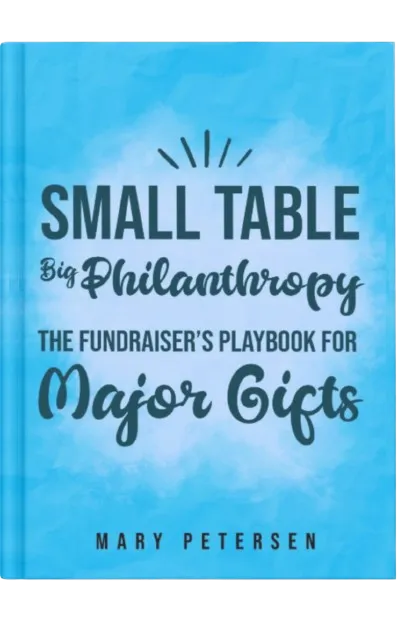
Small Table Big Philanthropy is the book that will change how you think about major gifts, and free you from the exhausting, endless chase for more.
End the volume treadmill. Build deeper relationships with the donors who can actually transform your organization.
WHAT'S INSIDE
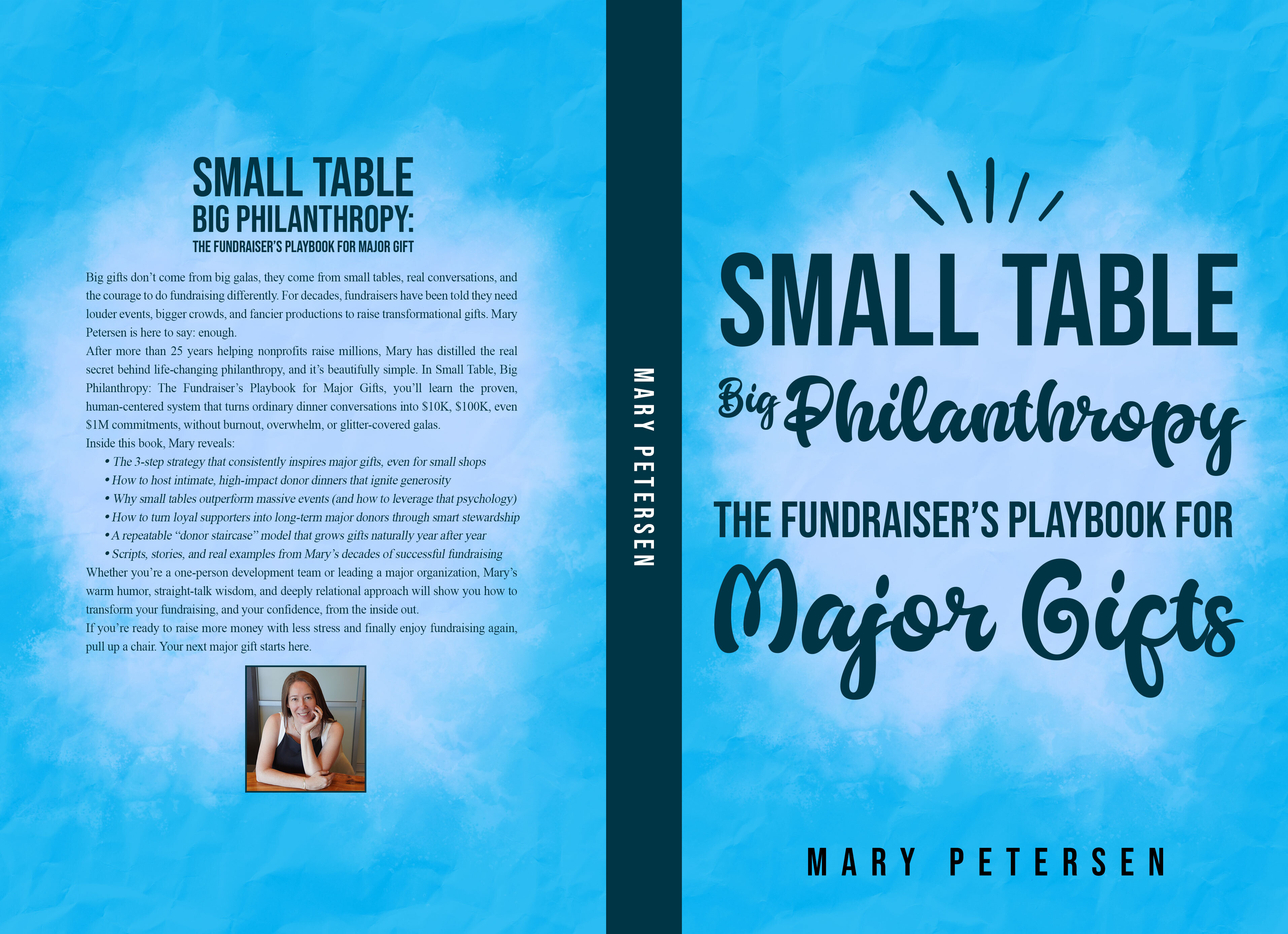
Small Table Big Philanthropy gives you a complete framework for building a major gift portfolio that's sustainable, productive, and designed for the way real fundraisers actually work. Inside, you'll find: The Small Table philosophy — why a focused portfolio of deeply cultivated relationships outperforms a sprawling list, every time, and how to make the case for this approach to your leadership How to build your table — a practical process for identifying which donors belong in your inner circle, and which ones are quietly draining your capacity The depth disciplines — the specific practices that move donor relationships from cordial to transformational, and how to build them into your calendar without burning out Conversation frameworks — what to say when you're ready to deepen a relationship, make a stretch ask, or bring a lapsed donor back to the table The long game — how a small table approach builds the kind of donor loyalty that sustains an organization for decades, not just the current fiscal year This is not a theory book. Every chapter is written for the fundraiser sitting at their desk on a Tuesday afternoon, trying to figure out what to do next.
You are not behind because you are not working hard enough.
You started this work because you believed in the mission. But somewhere between the spreadsheets, the lapsed donor reports, the board asks, and the two hundred names in your portfolio that you're "cultivating," the mission got buried under the weight of the list. You're not behind because you're not working hard enough. You're behind because nobody told you the truth about major gifts: more donors doesn't mean more money. It means more motion and less results. The fundraisers who consistently close transformational gifts aren't managing the biggest portfolios. They're building the deepest relationships, with fewer people, at a smaller table, on purpose . That's what this book is about.
What if the answer was a smaller table?
The industry told you to cast a wider net. What if the answer was a smaller table? Imagine starting Monday morning knowing exactly which ten donors you're moving forward this month. Not because you picked them randomly, but because you built a portfolio with intention, and you have a clear, specific plan for each conversation. No frantic scrambling. No guilt about the donors you haven't touched. No questions about whether you're doing the right things with the right people. Just focused, purposeful work that actually closes gifts. That's what happens when you stop managing volume and start building depth.
ABOUT MARY
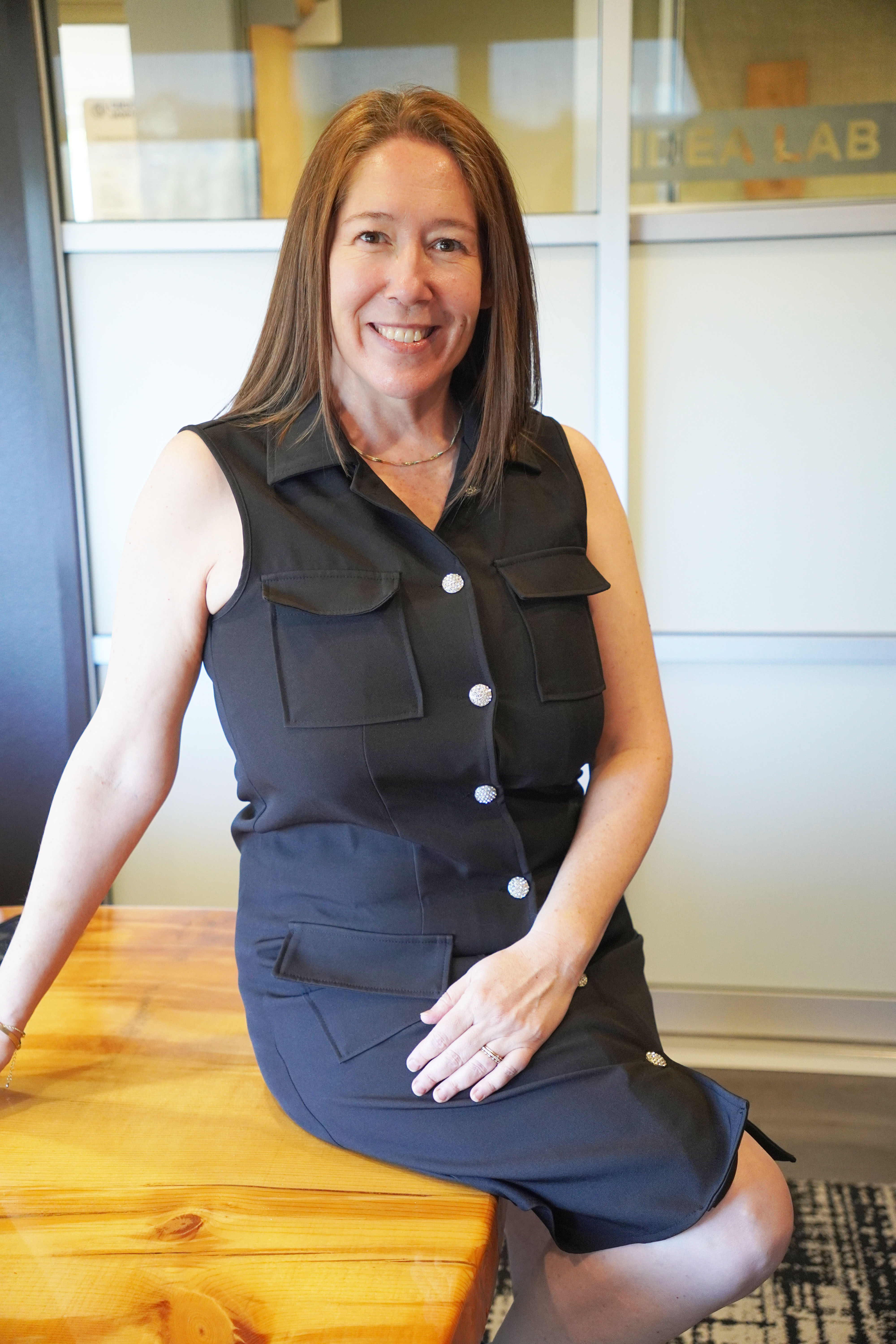
Mary Petersen has spent 25 years as a working major gift officer — not a consultant who theorizes from a distance, but a practitioner who has sat across from donors and made the ask. She closed a $100 million gift in seven months. She didn't do it by managing a massive portfolio. She did it by going exceptionally deep with the right people — and that experience is the foundation of everything in this book. Mary is the founder of Hey Fundraiser, a coaching platform for nonprofit fundraisers and executive directors, and the author of What to Say: 12 Major Gift Asks to Get a YES. She works with hundreds of nonprofit leaders every year, and the question she hears most often isn't "how do I find more donors?" It's "why isn't any of this working?" Small Table Big Philanthropy is her answer.
Your next transformational gift is already in your portfolio.
You just need a different approach to find it — and the clarity to go deep enough to close it. Small Table Big Philanthropy gives you both.
Available in [formats — print / digital / audio if applicable] Bulk orders for organizations and training programs: [email protected]
FAQS
Is this book for me if I'm just starting out in major gifts?
Yes — and actually, you're in the best position to build this way from the start. The small table approach is easier to establish early than it is to retrofit onto a chaotic portfolio later. This book will save you years of spinning your wheels.
How is this different from What to Say?
What to Say gives you the words for the ask itself. Small Table Big Philanthropy gives you the strategy that leads you to the right donors to ask — and the right relationships to make the ask work. They complement each other; many fundraisers read them together.
My organization expects me to manage a large portfolio. Can I still use this?
Absolutely. The book addresses this directly — including how to have the conversation with your leadership about why going deeper with fewer donors will produce better results. The philosophy works inside any organizational structure.
Is this practical or more of a big-picture read?
Both — but if you've read Mary's work before, you know she doesn't do abstract. Every chapter ends with something you can implement in your next week of work.